|
|
|
|
|
 |
|
|
|
|
|
|
|
|
Victorian Era Naval Print List
Cranston Military Prints  By Subject Naval Art Victorian Era By Subject Naval Art Victorian Era  Victorian Navy Print List Victorian Navy Print List |
[UP] - Alexandria - Hampton Roads - Manila Bay - Tsushima - Ships - Victorian Navy Print List |
| Victorian Era naval art. Complete list of prints depicting the ships, battleships and destroyers of the Victorian period. |
| Navigation | |
| Page 2 of 5 | Previous .. Page 2 .. Next |
|
|
|
|
|
|
|
|
|
|
|
|
|
|
|
|
|
|
|
|
|
| Navigation | |
| Page 2 of 5 | Previous .. Page 2 .. Next |
| Text for the above items : |
HMS Nymphe by W Fred Mitchell (P) HMS Nymphe was a Nymphe-class composite screw sloop and the fifth ship of the Royal Navy to bear the name. Developed and constructed for the Royal Navy on a design by William Henry White, Director of Naval Construction, she was launched at Sheerness Dockyard on 1st May 1888. From August 1914 Nymphe was a Shore training ship at Sheerness, later renamed Wildfire. |
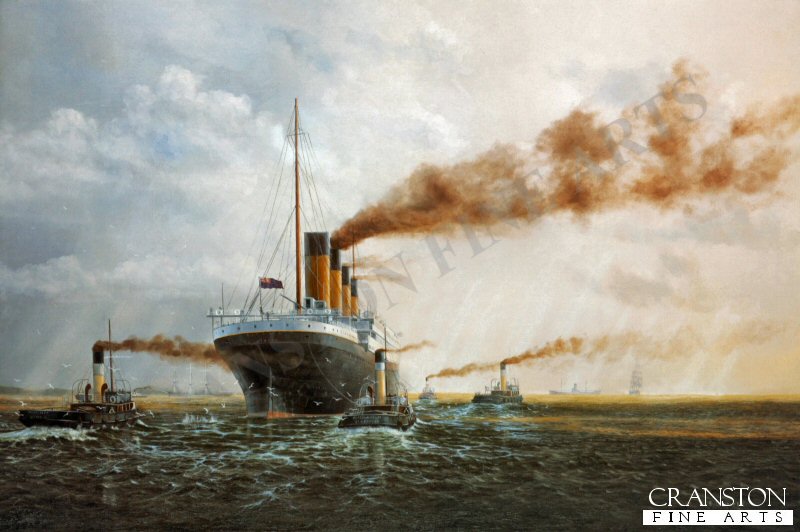
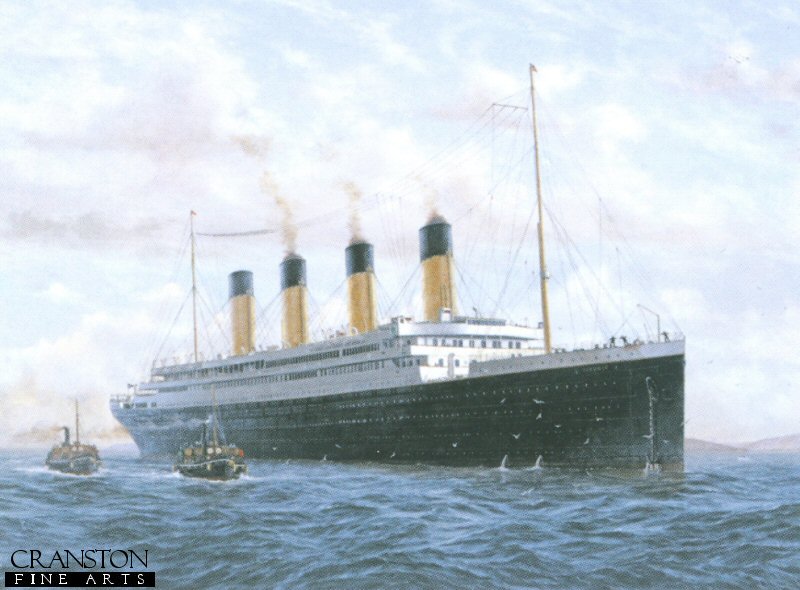
Titanic Sea Trials Completed by E. D. Walker. No text for this item |
RMS Mauretania (1907) off Point Lynas by E. D. Walker. No text for this item |
HMS Formidable in Plymouth Sound by Charles Dixon. Published in 1901 by George Newnes Ltd, this is an original book plate from a large format naval book. These may have some text from the book on the rear of the book plate, but this does not detract from the framed image. Only a few of these original book plates are still available today, more than a century after they were first published. |
HMS Magicienne by W Fred Mitchell (P) No text for this item |
HMS Rodney by W Fred Mitchell. (P) No text for this item |
HMS Hood at Malta 1896 By Randall Wilson. HMS Hood makes a turn to port, while in line and astern is HMS Collingwood. Valetta can be seen in the distance. |
The Mars in the Channel Squadron, 1901 by Charles Dixon. Published in 1901 by George Newnes Ltd, this is an original book plate from a large format naval book. These may have some text from the book on the rear of the book plate, but this does not detract from the framed image. Only a few of these original book plates are still available today, more than a century after they were first published. |
Battle of the Ironclads by Ivan Berryman. At Dawn on 9th March 1862, as the American Civil War raged on, an extraordinary combat took place in Hampton Roads, a naval exchange that was to herald a new age and completely change the concept and design of modern warships. Having already destroyed the two Federal warships Cumberland and Congress the previous day, the Confederate ironclad CSS Virginia readied herself for another day's work, her target this time being the grounded Minnesota. As the Virginia approached her target, she was confronted by the much smaller Union ironclad Monitor which had just arrived after a fraught journey from New York. Thus began an exchange of fire that lasted more than three hours, each ship's shot merely bouncing and deflecting off its opponent without inflicting any serious damage. With her smokestack shot away, the Virginia now concentrated her shot on the Monitor's tiny wheelhouse where a direct hit blinded the Union ship's commander, necessitating a temporary withdrawal. By the time Monitor was ready to re-engage, the Virginia was limping away, the result of this fierce encounter being nothing more than stalemate. Neither ship could claim any form of victory and neither had sustained any meaningful damage. Though clumsy and difficult to handle, the thick iron plating and low profiles of these very different vessels signaled a direction in warship design that lasted until the Second World War, eighty years later. |
HMS Calliope by W Fred Mitchell (P) No text for this item |
The Navy Earns its Wings by Stan Stokes. Stunt pilot Eugene B. Ely, a former race car driver, worked for the Curtiss Aircraft Company as a demonstration pilot in 1910, only seven years after the Wright Brothers first flight. Ely, a tall, lantern-jawed, individual was excited about the possibility of flying an aircraft off a ship. Glen Curtiss believed that such an attempt wood be fool hearty, and the Secretary of the Navy refused to allocate any funds for such a stunt. Although Ely couldn't swim, the pilot exuded the cocky self-confidence typical of early flyers. Ely persisted in his quest and finally got the Navys first Director of Aviation to allow Ely to utilize the USS Birmingham for one day. On November 14, 1910 an 83-foot ramp was constructed over the ships forecastle. Ely readied his Curtiss pusher biplane for the momentous attempt. As bad weather began to close in the impatient flyer decided that he could not wait for the Birmingham to get underway. Ely, appropriately suited in a football helmet, fired up the engine of his fragile aircraft, strapped himself aboard, and signaled for his plane to be released. The Curtiss pusher rumpled down the short ramp, which was unfortunately downward sloping. The observers gasped as the small airplane dropped over the bow, and skimmed over the waves, and finally made it into the air. A few months later in January of 1911 Ely was determined to make the first landing of an aircraft on a ship. This time the event would take place in San Francisco harbor, and the landing would take place on the USS Pennsylvania. The date was January 18, 1911 and the exact time was 10:00 AM. A platform of about 120 feet in length was build on the stern of the Navy cruiser. A series of ropes connected to sand bags on either end were run across this ramp. Ely took off in his Curtiss pusher from a local Army airfield in San Bruno. He was bundled in heavy clothing, and because he could not swim, Ely had fashioned a bicycle inner tube into a self-made life preserver. The pilot made his way out into the Bay in his fragile craft. Spotting the Pennsylvania surrounded by dozens of spectator ships, Ely lined-up his fragile craft with the stern of the vessel, which was crowded with seamen anxious to see a first. About fifty feet short of the deck, Ely cut his throttle, but a gust of wind ballooned his flying machine. Not losing his cool, Ely held his landing altitude and snagged the 26th rope with his simple landing hook. The Curtiss stopped in about thirty feet. The sailors and onlookers cheered the event, which was declared a milestone in flight by both the ships Captain and later that day by the San Francisco press. After a nice lunch with the Captain, Ely fired up his engine and took off from the Pennsylvania, having become Americas first naval aviator. |
The Lusitania by Robert Barbour. Cunard liner RMS Lusitania leaves New York outward bound for Liverpool just before the First World War. Sadly on 7th May 1915 she was torpedoed by the German submarine U-20 and sank within 20 minutes with the loss of 1,198 lives. |
HMS Dreadnought at Portsmouth by Randall Wilson. HMS Dreadnought passes Spice Island as she heads for the open sea escorted by a torpedo boat destroyer. |
The Prince George at Spithead: The Naval Requiem of Queen Victoria by Charles Dixon. Published in 1901 by George Newnes Ltd, this is an original book plate from a large format naval book. These may have some text from the book on the rear of the book plate, but this does not detract from the framed image. Only a few of these original book plates are still available today, more than a century after they were first published. |
SS Great Britain Off Cowes by Ivan Berryman. One of Isambard Kingdom Brunel's most elegant designs, the 322ft long SS Great Britain of 1843 was the first ocean-going vessel to be made entirely of metal and also the first to be propeller-driven. She enjoyed a long and varied career before being abandoned as a hulk in the Falkland Islands at the end of the 1800s. In 1970, she was brought home to Bristol where she was fully restored and can be visited today. She is depicted in the Cowes Roads after her epic rounding of The Lizard on her maiden voyage, during which she had encountered - and survived - a violent storm. |
RMS Queen Mary (1936) The Voyage Ahead by John Young. No text for this item |
Titanic - Maiden Voyage - Irish Farewell, Queenstown, Eire by E. D. Walker. No text for this item |
Majestic Malta by Randall Wilson. With the British Mediterranean Fleet riding at anchor in Grand Harbour Malta, HMS Majestic is shown preparing to leave harbour as local fisherman look on. |
Remember the Maine by Stan Stokes. No text for this item |
Battle of Tsushima by Anthony Saunders. Japanese Torpedo destroyers, rush in to finish off the Russian battleships near the end of the Battle of Tsushima. |
HMS Victoria by W Fred Mitchell (P) No text for this item |
| Navigation | |
| Page 2 of 5 | Previous .. Page 2 .. Next |
| List of all Victorian era ships in our database |
|
|
|
|
|
|
Contact Details |
|
Sign Up To Our Newsletter!
This website is owned by Cranston Fine Arts. Torwood House, Torwoodhill Road, Rhu, Helensburgh, Scotland, G848LE Contact: Tel: (+44) (0) 1436 820269. Email: cranstonorders -at- outlook.com
|
|
|